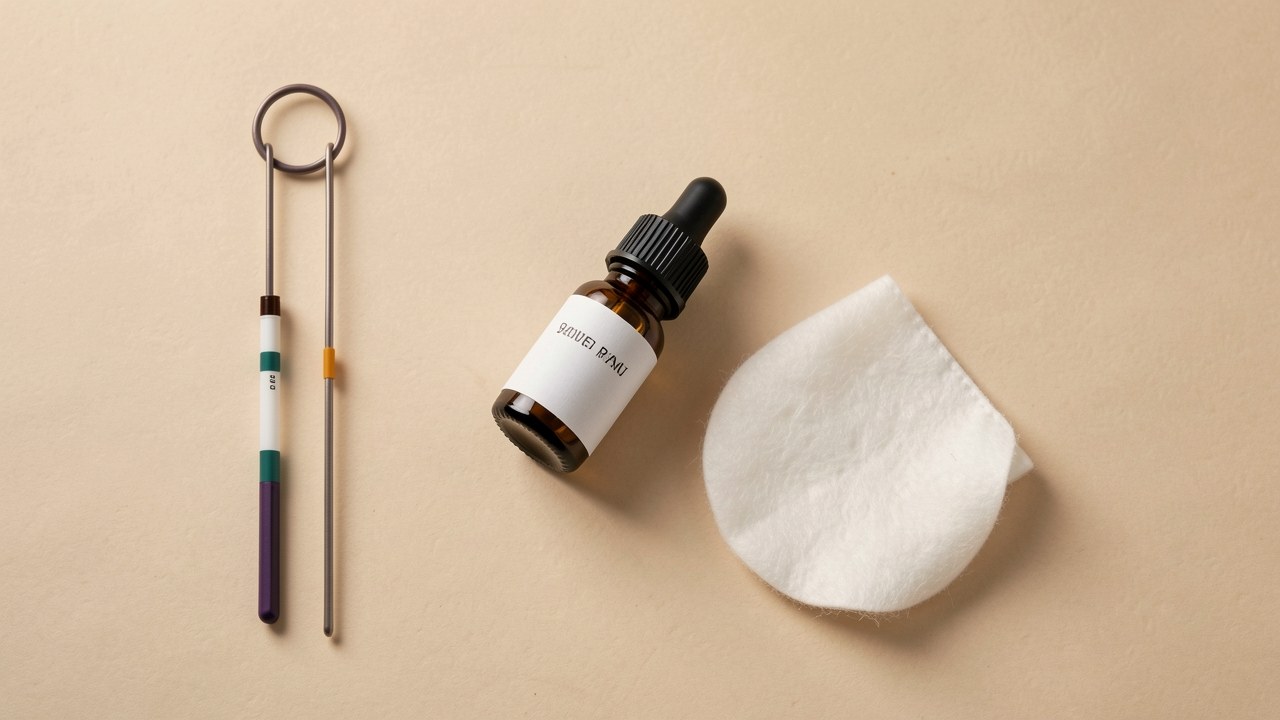
What patch testing is and is not
A patch test applies a small amount of a substance or product to the skin and leaves it on to see whether a reaction develops. More than 15,000 substances can cause an allergic skin reaction, according to a figure the American Academy of Dermatology is reported to cite. In practice, at-home patch testing is a screening step: it helps you notice an obvious reaction before you commit to using a new beauty, hair or fragrance product over a larger area.
It is not a diagnosis, and it is not proof that a product will suit you indefinitely. A manufacturer's own patch-test guidance states that a patch test is only for determining initial irritation reactions to products and does not guarantee similar results when applied to other areas of the body, including the face, or after continuous use. That manufacturer also states its patch test does not account for underlying conditions and should not be used for the diagnosis of hypersensitivity or allergic contact dermatitis. Treat a negative home test as a reasonable first signal, not a guarantee.
- What it can do: flag an obvious early irritation or reaction to the specific product you tested, on the specific site you tested.
- What it cannot do: diagnose an allergy, predict a reaction to a different product or ingredient, or clear a product for long-term use on your face.
- What it is not: the same as clinical patch testing performed by a dermatologist, or the same as a skin prick test for hay fever allergy.
- What it is not: a substitute for the product's own instructions. Following the label directions is part of the test.
Sources: American Academy of Dermatology (AAD), Medical News Today, DermNet NZ, The Ordinary (Deciem)
Where to test on skin and scalp for different product types
The usual at-home starting point is a small patch of skin where the product will not be washed or rubbed away, such as the inside of the arm or the bend of the elbow. That area is convenient to observe and easy to keep dry for a few hours. Apply a quarter-sized patch of the product, as thickly as you would when using it regularly, and leave it on for as long as it would normally be on the skin. A wash-off product such as a cleanser should stay on for about five minutes or as long as the instructions advise.
Hair products deserve care because the scalp is not the only place that can react. Permanent hair dye carries particular risk because of the allergen paraphenylenediamine (PPD), and hair dye is one of the product categories most often implicated in suspected cosmetic allergic contact dermatitis. Fragrance is another high-attention category: fragrances and preservatives are the most frequently identified allergens in cosmetic allergic contact dermatitis, and fragrances including natural and essential-oil-derived ones such as linalool and limonene can be allergy-inducing. The AAD advises that if fragrance in skin care products is causing a reaction, products labelled 'fragrance free' should be chosen, and that products labelled 'unscented' or containing plant-based botanical ingredients may still contain fragrance-related ingredients.
For a leave-on skin product, the upper forearm or inner arm is a reasonable test site. For a rinse-off cleanser, the same area works because the product will be rinsed away after the contact time. For a hair product such as a shampoo or conditioner, one commercial provider describes using the product as directed on the packaging but applying it to the inner arm instead of the scalp. For hair dye, do not improvise a test on a hidden area of the scalp; follow the manufacturer's instructions exactly, and if you have a history of reactions, treat that as a reason to talk to a clinician rather than to self-test.
- Leave-on skin products and cosmetics: a quarter-sized patch on the inside of the arm or bend of the elbow, applied as thickly as normal use.
- Wash-off cleansers: same site, left on for about five minutes or as the instructions advise, then rinsed.
- Hair products such as shampoo or conditioner: one provider's guidance is to use the product as directed but on the inner arm rather than the scalp.
- Fragrance: fragrance ingredients are among the most frequently identified allergens in cosmetic allergic contact dermatitis, so test in a small area and watch for a delayed reaction.
- Hair dye: PPD in permanent hair dyes is a notorious allergen. Follow the manufacturer's own instructions rather than designing your own test.
Sources: American Academy of Dermatology (AAD), Medical News Today, Dermatology Research and Practice (peer-reviewed, PubMed Central), Dr Tamara Lazic Strugar (board-certified dermatologist), Graydon Skincare
A step-by-step trial sequence over several days
At-home trial protocols differ, and no single schedule is universal. The AAD recommends repeating the patch test twice a day for between 7 and 10 days, because a reaction may not happen immediately. A manufacturer instruction for leave-on and rinse-off products is shorter: apply a small amount to a clean area of the upper forearm, keep it dry, rinse after 24 hours, and do not use the product if redness, burning, itching, blistering or irritation occurs at any time. A commercial brand describes a middle path for cleansers: cleanse the inside of the upper forearm for about a minute, rinse, and repeat after 24, 48 and 72 hours if there is no negative reaction. Clinicians also describe a repeat open application test: apply the product twice a day to a 5 cm diameter area of forearm skin for 5 to 10 days.
Because these are different protocols, pick one and follow it consistently. The following sequence follows the AAD's repeated-application approach, which is the longest and most cautious of the at-home options described here.
If you are testing a product whose label gives its own patch-test instructions, follow the label. The label directions are part of the test, and they may be shorter than the routine below.
- Day 0: choose a small test site, such as the inside of the arm or the bend of the elbow. Wash and dry the area.
- Day 0: apply a quarter-sized amount of the product, as thickly as you would in normal use. For a wash-off cleanser, leave it on for about 5 minutes or as the instructions advise, then rinse.
- Day 0: leave the product on the skin for as long as it would normally be on the skin. Do not cover it with a bandage unless the product's own instructions say to.
- Days 1–7 to 10: repeat the application twice a day. Keep the site dry where practical. Check the site before each application and note anything you see.
- Throughout: stop the test and wash the product off if you see redness, burning, itching, blistering or irritation at any time.
- End of test: if the site has stayed calm, you can consider using the product as directed on a small area first, then normally. If the site reacted, stop using it and record the reaction.
Sources: American Academy of Dermatology (AAD), Medical News Today, DermNet NZ, The Ordinary (Deciem), Graydon Skincare
What a normal reaction looks like versus a red flag
There are two types of contact dermatitis, and they behave differently. Irritant contact dermatitis (ICD) occurs minutes to hours after contact and causes burning, stinging or pain. Allergic contact dermatitis (ACD) takes days after contact for the rash to develop, which is why pinpointing the source of an allergic reaction is difficult and why a patch test can take days to show a result. A red, raised, itchy patch of dermatitis is the typical appearance of a positive reaction in clinical testing; it can be vesicular or even blistering, and strongly positive reactions can sometimes cause a local blister lasting several weeks. A small rash with red, raised skin and tiny blisters may also be visible.
For at-home purposes, the clearer red flags come from the manufacturer instruction and the clinical adverse-reaction list. The manufacturer states that a product should not be used if redness, burning, itching, blistering or irritation is observed at any time during the test. A separate manufacturer instruction for a salicylic acid product advises rinsing off, ceasing use and consulting a physician right away if severe irritation, hives, swelling of eyes and mouth, blistering or difficulty breathing develops. These are not ordinary patch-test findings, and they should not be waited out.
| Observation | Type of response described | What to do |
|---|---|---|
| Burning or stinging within minutes to hours of contact | Irritant contact dermatitis (ICD) | Wash the product off and stop using it on that area. |
| Red, raised, itchy patch, with or without tiny blisters, appearing a day or more after contact | Allergic contact dermatitis (ACD) pattern | Wash the product off and stop using it. Record what you saw. |
| Blistering or a local blister lasting several weeks | Strongly positive clinical reaction | Stop use and seek medical advice. |
| Severe irritation, hives, swelling of eyes and mouth, blistering or difficulty breathing | Red flag in a manufacturer instruction | Rinse off, cease use and consult a physician right away. |
| No visible redness or swelling after a repeat open application test | No reaction detected in that test | Contact allergy to that product is made less likely, but a negative test does not prove the product is safe for all future use. |
Sources: Medical News Today, DermNet NZ, Dr Tamara Lazic Strugar (board-certified dermatologist), The Ordinary (Deciem), Skin & Beauty Center (dermatology practice)
When to stop use and when to ask a professional
Stop using the product and wash it off as soon as possible if the skin reacts. A cool compress or petroleum jelly can be used to relieve the skin if needed. If a reaction is severe and is not relieved with cool compresses or petroleum jelly, the AAD advises that a dermatologist may need to be seen to help manage symptoms. The manufacturer instruction is more urgent for a specific set of symptoms: rinse off, cease use and consult a physician right away if severe irritation, hives, swelling of eyes and mouth, blistering or difficulty breathing develops.
Beyond that, the AAD advises talking to a board-certified dermatologist when the exact irritant is hard to identify. Clinical patch testing is performed to find out whether a skin condition is caused or made worse by contact allergy, and a referral is appropriate where the cause of skin irritation is difficult to pinpoint. In a clinical patch test, allergens are applied in a grid of patches to clean, unbroken skin, usually the back, under hypoallergenic tape, and left in place for 48 hours. The patches are removed at 48 hours, the sites are marked, and the skin is assessed around 72 to 96 hours after placement. During that time the back must stay dry, so bathing and showering the test area are avoided, and exercise is discouraged because the patches need to adhere closely to the skin.
- Stop the test and wash the product off if redness, burning, itching, blistering or irritation appears at any time.
- Relieve the skin with a cool compress or petroleum jelly if needed.
- See a dermatologist if a reaction is severe and is not relieved by cool compresses or petroleum jelly.
- Seek medical advice promptly if you have had a stronger systemic reaction, such as hives, swelling of the eyes or mouth, or difficulty breathing, in connection with a product.
- Ask a clinician if the cause of your skin irritation is hard to pinpoint, especially if reactions keep recurring.
- Clinical patch testing is not useful for investigating irritant dermatitis, and it is not the same as a skin prick test for hay fever allergy.
Sources: American Academy of Dermatology (AAD), DermNet NZ, The Ordinary (Deciem), Doctor O'Donovan (YouTube)
How to record results for future product decisions
A written record turns a single test into information you can use later. Because allergic contact dermatitis usually does not occur on first contact — the immune system typically needs repeated exposure before it becomes sensitized — a product that seemed fine in the first few days can still produce a reaction later. A note of what you tested, where you tested it, when the test started and what you observed gives you something concrete to compare against the next product.
Keep the record simple and consistent. The point is to make patterns visible over time, not to build a laboratory notebook.
How to record results for future product decisions: list the product name and the date you started the test. Write the test site, for example 'inner left forearm'. Note the application schedule you followed, such as twice a day for seven days. Record what you saw each day in a few words: clear, slightly pink, itchy, stinging, small bumps, blistered. Note the day the change appeared, because the delay matters. Finally, note what you did next, such as stopped use, continued use, or asked a clinician.
- Product name and the exact wording of the product type, such as 'leave-on face cream' or 'permanent hair dye'.
- Start date of the test and the date you finished or stopped.
- Test site, for example inner left forearm or bend of the right elbow.
- Application schedule you followed.
- Daily note in a few words: clear, slightly pink, itchy, stinging, small bumps, blistered.
- Day the first change appeared.
- Action you took: stopped use, continued use, or asked a clinician.
- Any deliberate notes about the product type, such as whether it is a fragrance product, a cleanser or a hair dye.
Sources: American Academy of Dermatology (AAD), Medical News Today, Dr Tamara Lazic Strugar (board-certified dermatologist), The Ordinary (Deciem)
Why some product categories call for more caution
An estimated 1 to 5.4% of the population is sensitized to a cosmetic or cosmetic ingredient, according to a peer-reviewed patch-testing study of suspected cosmetic allergic contact dermatitis. That study, which looked at 50 patients, found that face creams (20%), hair dyes (14%) and soaps (12%) were the most commonly implicated products. Hair dye was the most common suspected cosmetic among males, and face creams were most common among females. The authors note that the patient population is not representative of the US audience, so the figures are best read as a study-specific snapshot rather than a universal ranking.
That figure is reported rather than independently verified here, so treat it as a reported estimate.
The practical implication is not that any particular product is dangerous. It is that some categories, such as hair dye and fragrance-containing products, have a higher profile in reports of cosmetic contact allergy. For those categories, the cautious version of the routine — a small area, a longer observation window and a lower threshold for stopping — is a reasonable choice.
- Fragrances and preservatives are the most frequently identified allergens in cosmetic allergic contact dermatitis.
- Methylisothiazolinone (MI) and paraphenylenediamine (PPD) in permanent hair dyes are named as frequent culprits by named board-certified dermatologists.
- Natural and essential-oil-derived fragrances such as linalool and limonene can be allergy-inducing, and 'organic' or natural skin-care products are not exempt from causing a rash.
- Some people tolerate a product on covered skin but react to it on exposure to light. This photocontact dermatitis pattern can be relevant to some fragrances, antiseptics, plant allergens and sunscreen reactions.
Sources: Dermatology Research and Practice (peer-reviewed, PubMed Central), Dr Tamara Lazic Strugar (board-certified dermatologist)
Frequently asked questions
Do I need to patch test every new product?
No universal rule requires it. The useful question is whether a product is worth the small cost of a test before you use it more widely. Products that stay on the skin for hours, products used near the eyes, hair dyes, and fragrance-containing products are reasonable candidates for a cautious test, because fragrance and preservatives are the most frequently identified allergens in cosmetic allergic contact dermatitis and because hair dye carries a known allergen in PPD. If a product's own label includes patch-test instructions, follow those. If you have a history of reactions, ask a clinician rather than relying on a home test alone.
Sources: Dermatology Research and Practice (peer-reviewed, PubMed Central), Dr Tamara Lazic Strugar (board-certified dermatologist), The Ordinary (Deciem)How long should I wait before using a product normally?
Waiting periods differ between protocols, so follow the one you started. The AAD recommends repeating the patch test twice a day for 7 to 10 days, because a reaction may not happen immediately. A manufacturer instruction for leave-on and rinse-off products uses a single 24-hour check before you decide. A clinician-described repeat open application test uses twice-daily application for 5 to 10 days. These are not equivalent, and none of them guarantees that a later reaction will not appear. If the site has stayed calm for the full period you chose, you can try the product on a small area first and then use it as directed.
Sources: American Academy of Dermatology (AAD), Medical News Today, DermNet NZ, The Ordinary (Deciem)Can I patch test a fragrance on my wrist?
You can test on a small area, but the inside of the arm or the bend of the elbow is the more commonly recommended site because it is less likely to be washed or rubbed away. Fragrance deserves more caution than many people expect: fragrances and preservatives are the most frequently identified allergens in cosmetic allergic contact dermatitis, and natural or essential-oil-derived fragrances such as linalool and limonene can also be allergy-inducing. If fragrance is a problem, the AAD advises choosing products labelled 'fragrance free', and notes that products labelled 'unscented' or containing plant-based botanical ingredients may still contain fragrance-related ingredients.
Sources: American Academy of Dermatology (AAD), Dermatology Research and Practice (peer-reviewed, PubMed Central), Dr Tamara Lazic Strugar (board-certified dermatologist)What should I do if a reaction appears after several days?
Stop using the product and wash it off as soon as possible. A cool compress or petroleum jelly can be used to relieve the skin if needed. If the reaction is severe and is not relieved by cool compresses or petroleum jelly, the AAD advises that a dermatologist may need to be seen to help manage symptoms. If instead you see severe irritation, hives, swelling of eyes and mouth, blistering or difficulty breathing, rinse off, cease use and consult a physician right away. A late reaction can also occur after a clinical patch test; in that setting, the guidance is to photograph it and contact the clinic. Record what you saw and when it appeared so you have a clear history for any future decision.
Sources: American Academy of Dermatology (AAD), The Ordinary (Deciem), Doctor O'Donovan (YouTube)Does a negative patch test mean the product is safe for me?
No. A manufacturer's own guidance states that a patch test is only for determining initial irritation reactions to products and does not guarantee similar results when applied to other areas of the body, including the face, or after continuous use. It also states that a patch test does not account for underlying conditions and should not be used for the diagnosis of hypersensitivity or allergic contact dermatitis. A negative home test makes an obvious immediate reaction less likely on the site you tested. It is not proof that the product will never cause a problem, and it does not tell you anything about a product you have not tested.
Sources: The Ordinary (Deciem)How is a home patch test different from clinical patch testing?
Clinical patch testing is the gold standard for diagnosing allergic contact dermatitis. In a dermatologist's office, allergens are applied in a grid of patches to clean, unbroken skin, usually the back, under hypoallergenic tape, and left in place for 48 hours. The patches are removed at 48 hours, the sites are marked, and the skin is assessed around 72 to 96 hours after placement. During that time the back must stay dry, and exercise is discouraged. Reactions are graded negative, irritant, doubtful, weak positive, moderate or strong for each allergen. A home patch test is a smaller screening step that can flag an obvious initial reaction, but it does not reproduce that process and it cannot diagnose an allergy.
Sources: DermNet NZ, Dr Tamara Lazic Strugar (board-certified dermatologist), Doctor O'Donovan (YouTube)What does a positive patch test reaction look like?
A positive clinical patch test appears as a red, possibly raised, itchy patch of dermatitis at the application site of the offending allergen, and it can be vesicular or even blistering. Strongly positive reactions can sometimes cause a local blister lasting several weeks. A practice description adds that tiny blisters may also be visible. In an at-home test, the signs a manufacturer told users to act on are redness, burning, itching, blistering or irritation at any time during the test.
Sources: DermNet NZ, The Ordinary (Deciem), Doctor O'Donovan (YouTube), Skin & Beauty Center (dermatology practice)Is a patch test enough if I have had a severe allergic reaction before?
No. A home patch test is not a way to investigate a history of severe reactions. Professional patch testing itself may not be recommended for people with a history of severe allergic reactions that could lead to anaphylaxis, those on medications that could alter results, and those with active skin conditions such as severe eczema or psoriasis on the sites that would be tested. Eligibility for clinical testing is a decision for a clinician, not a self-assessment. If you have had a severe reaction to a cosmetic or hair product, speak to a clinician before testing anything further on your own.
Sources: Graydon SkincareSources
- How to test skin care products — American Academy of Dermatology (AAD)
- The importance of patch testing skin care products — Medical News Today
- Patch Testing in Suspected Allergic Contact Dermatitis to Cosmetics — Dermatology Research and Practice (peer-reviewed, PubMed Central)
- Patch tests — DermNet NZ
- A Patch Test Can Reveal If You're Allergic to Your Beauty Products — Dr Tamara Lazic Strugar (board-certified dermatologist)
- Patch Testing Guide — The Ordinary (Deciem)
- Patch Testing 101: Why and How to Conduct a Patch Test — Graydon Skincare
- ALLERGY TESTING: Doctor explains the Skin Patch Test — Doctor O'Donovan (YouTube)
- Allergy Patch Testing in Los Angeles, CA — Skin & Beauty Center (dermatology practice)