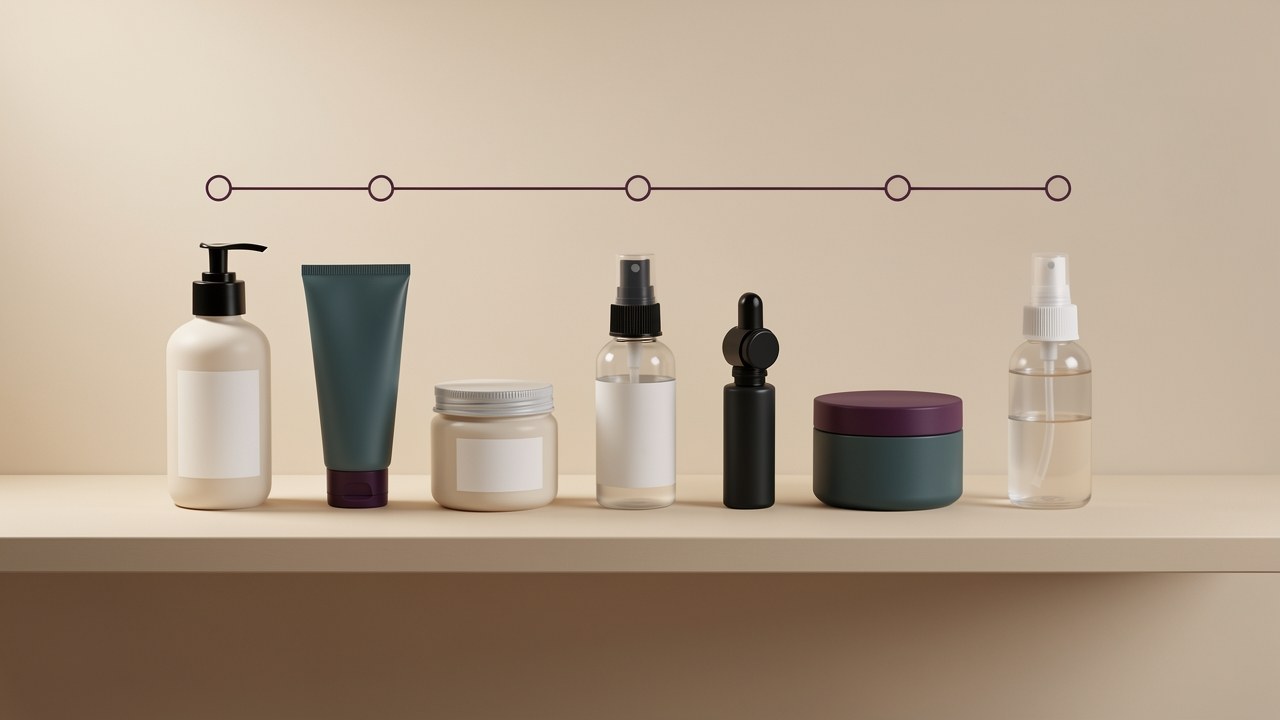
Why order matters and where it matters less
Order matters most where products can physically get in each other's way. A lightweight layer applied first can be sealed under a heavier one; a rinse-off product that stays on the skin only briefly does not need to sit in the same position in the sequence as a leave-on treatment. Thinking in terms of what stays on the skin or hair, and what gets rinsed away, is more useful than memorizing a fixed list of product names.
Order matters less when the steps are doing different jobs in different places. A scalp treatment and a body lotion do not compete for the same surface, so the relative timing between them is a matter of convenience rather than function. Fragrance is commonly placed last, though the reason is convention rather than a documented necessity. That placement also matches how hair fragrance is meant to be used: on clean, dry hair, after styling, on the mid-lengths and ends.
- Rinse-off products first: cleansers, shampoos and conditioners are removed, so later leave-on products are not layered on top of residue.
- Thin to thick for leave-on skin products: lighter textures go on before richer creams and balms.
- Treatments before sealants: a serum or active goes on before an occlusive oil or heavy cream.
- Hair styling after washing and conditioning: leave-in products and stylers need clean, prepped hair to distribute evenly.
- Fragrance last: scent goes on once the skin and hair are dry and the rest of the routine is finished. For hair, that means dry hair rather than damp.
Sources: L'Oréal Paris USA, Azelis
Step sequence from cleansing onward
A workable order treats the routine as a single line from cleansing to finishing, whether you are doing skin, hair or both. The steps below are written for a typical morning or evening session; the sequence does not change with the time of day, only the products you choose.
The relative order of hair leave-in and facial steps is flexible; this sequence reflects common practice, not a proven necessity. The rest of the order follows the same logic throughout: remove what needs removing, apply leave-on hair products to clean, damp hair, add water-based and lightweight skin layers while the surface is still receptive, then move to richer textures, and finish with fragrance on dry skin and dry hair.
- Cleanse the face and body, and shampoo the hair if it is a wash day.
- Condition the hair and rinse thoroughly.
- While hair is still damp, apply any leave-in conditioner, detangling spray or heat protectant if you plan to style with heat.
- Apply skin treatments that are water-light, such as a hydrating toner or serum, to clean skin.
- Apply eye-area products if you use them, before heavier creams.
- Apply a moisturizer or facial oil, working from lighter to richer textures.
- Apply sunscreen in the morning as the last skin step.
- Style the hair once it is dry or as dry as your routine requires.
- Apply fragrance to pulse points or clothing, once skin and hair are dry.
- If you use a hair-specific fragrance, spray it after styling so it is the final hair step.
Sources: L'Oréal Paris USA, Azelis
Where hair steps fit in the same timeline
Hair steps are easiest to fit when you decide early whether it is a wash day or a refresh day. On a wash day, shampoo and conditioner belong at the start, before skin steps, because they are rinse-off products and do not need to sit on the hair while you do anything else. Leave-in conditioners, detangling sprays and styling products come after towel-drying and before heat styling. On a non-wash day, hair steps shrink to styling and finishing.
Hair fragrance is also built into leave-in conditioners, styling sprays and scalp mists, so a single product can cover both a hair-care step and a scent step in one application. Hair holds scent longer than skin, which is one reason hair-focused fragrance products exist as a separate category from standard perfume. That longevity is a reason to place hair scent near the end of the timeline rather than early, so it is not disturbed by later combing or styling products.
- Wash days: shampoo, conditioner, leave-in, styler, then any hair fragrance.
- Refresh days: dry shampoo or refreshing mist, then leave-in or styler if needed, then hair fragrance.
- Hair fragrance can come from a dedicated mist or from a leave-in conditioner or styling spray that already carries scent.
- Apply hair fragrance after styling, not before, so it is not worked through by brushes or heat tools.
Sources: L'Oréal Paris USA, Beauty Bridge, Azelis
Fragrance placement and why timing differs
Fragrance is usually the last step because it is the step that benefits most from dry skin and dry hair. Standard perfume is not the right product for hair: high alcohol levels in many standard fragrances can dry out hair, which is why hair-specific fragrance exists. Hair perfumes are formulated differently, typically with lower alcohol content and conditioning ingredients such as lightweight oils or hyaluronic acid.
For hair, the recommended placement is mid-lengths and ends rather than the scalp or roots, so the scalp's natural oils are not disturbed. A light, sweeping spray from about 6 to 8 inches away helps distribute the scent evenly and reduces buildup. For skin, pulse points remain the usual placement because they are warm and exposed.
Timing differs between skin and hair because the two surfaces behave differently. Hair holds scent longer than skin, so a hair fragrance can be applied earlier in the day and still be present later. On skin, fragrance is best applied to clean, dry skin after moisturizer, which gives it a settled surface to sit on.
- Hair: spray mid-lengths and ends, not the scalp or roots.
- Hair: hold the bottle about 6 to 8 inches away and use light, sweeping motions.
- Hair: apply to clean, dry hair rather than damp hair.
- Skin: apply to pulse points after moisturizer and before dressing.
- Layering: use hair-care products and a hair fragrance with similar or complementary scents to extend the overall impression.
Sources: L'Oréal Paris USA, Beauty Bridge
Common order mistakes
Most order mistakes come from applying a product before the surface is ready for it. Damp hair absorbs a hair fragrance differently from dry hair, so spraying too soon after a shower is a common reason the scent does not last as expected. Similarly, applying a rich cream before a lightweight serum can make the serum harder to spread and less pleasant to use.
Another common mistake is treating standard perfume as a hair product. Because standard fragrances often contain high alcohol levels, spraying them on strands can dry hair out. A hair-specific perfume or a scented leave-in product is the better choice for the hair step.
A third mistake is putting hair fragrance on the scalp. The scalp is not the target; mid-lengths and ends are. Moving the spray point down and using a lighter hand usually resolves both the oiliness and the heaviness that can follow.
The practical corrections below follow from the mistakes just described; they are common-sense adjustments, not a sourced protocol for every product.
- Fix damp-hair fragrance: wait until hair is dry, then reapply lightly to mid-lengths and ends.
- Fix heavy skin layering: reverse the order so lighter textures go on before richer ones.
- Fix fragrance that fades quickly on skin: apply to clean, dry skin after moisturizer rather than over damp skin.
- Fix hair that feels weighed down: reduce the number of sprays and keep them away from the roots.
- Fix scent conflict: choose hair and skin products that share a similar or complementary scent family.
Sources: L'Oréal Paris USA, Beauty Bridge
A condensed order for low-energy days
A short routine can keep the same order logic without keeping every step. The idea is to preserve the positions that matter most: cleanse or refresh, one leave-on layer for skin, one for hair if needed, and fragrance last. Skipping steps is a personal choice, and the order itself does not change.
This condensed sequence is seven steps. It works for a morning or an evening and does not require a wash day. Which optional treatments you keep or drop depends on your own needs and what you have on hand.
- Cleanse the face, or rinse with water if that is enough for the day.
- Apply one leave-on skin product, such as a moisturizer with sunscreen in the morning.
- Refresh hair with dry shampoo or a light mist if it needs it.
- Apply one leave-in hair product if hair feels dry or tangled.
- Style minimally, or leave hair as it is.
- Apply fragrance to pulse points if desired.
- Apply hair fragrance to mid-lengths and ends if desired.
Sources: L'Oréal Paris USA, Azelis
How much choice is in each category right now
Market context can help set expectations about how much choice is available in each category, even if it does not change application order. Fragrance and hair care are active categories with many products competing for a place in a routine, which is one reason a clear order is useful.
The range of formats matters more than any single figure: fragrance appears as dedicated perfume, hair perfume, body mist and scented styling products, while hair care includes serums, masks, oils, leave-in treatments and scalp-focused products. That variety is why a routine can be assembled in more than one way and still follow the same underlying sequence.
- Fragrance formats include standard perfume, hair-specific perfume, body mist and scented hair-care products.
- Hair-care formats include serums, masks, oils, leave-in treatments and scalp-focused products.
- Many recent hair-care launches are leave-on products, which means they sit alongside styling rather than replacing it.
Sources: L'Oréal Paris USA, Azelis, Circana
Frequently asked questions
Does the order change if I shower in the evening instead of the morning?
The sequence itself does not change with the time of day. If you shower in the evening, cleansing and hair washing still come first, leave-on skin and hair products still follow, and fragrance still goes last. What changes is the products you might choose, such as a richer moisturizer at night or sunscreen in the morning. The order is the same line from cleansing to finishing.
Sources: L'Oréal Paris USA, AzelisShould leave-in hair products go before or after facial steps?
Leave-in hair products go after washing and conditioning, and they can be applied before or after facial steps as long as the hair is prepped first. The relative order of hair leave-in and facial steps is flexible; this sequence reflects common practice, not a proven necessity. The practical rule is to finish rinse-off hair steps before moving to leave-on skin steps, then return to hair for leave-in and styling products. Fragrance, including hair fragrance, comes after both.
Sources: L'Oréal Paris USA, AzelisIf I skip steps, which ones are safest to drop first?
There is no single skip order that fits everyone. A short routine can keep cleansing or refreshing, one leave-on skin layer and one leave-on hair layer if needed, and fragrance last. Which steps you drop depends on your needs and what you have on hand. Dropping optional treatments, such as a separate serum or a second styling product, is one common way to shorten the routine while keeping the overall sequence intact.
Sources: L'Oréal Paris USA, AzelisDoes order matter as much for hair products as for skin products?
Order matters for both, but the reasons differ. On skin, the main concern is layering lightweight textures before richer ones so each product can be spread as intended. On hair, the main concern is putting rinse-off products first and leave-on products after, then applying styling and fragrance last so they are not disturbed. Hair fragrance specifically belongs after styling and on dry hair rather than damp hair.
Sources: L'Oréal Paris USA, AzelisSources
- What Is Hair Perfume and How Do You Use It? — L'Oréal Paris USA
- Summer Trend – Hair Fragrance | the Beauty Bridge Connoisseur — Beauty Bridge
- The rise of Hair Perfume: Fragrance meets Hair Care — Azelis
- US Beauty Industry Posts Solid First-Half Growth as Fragrance and Skincare Lead Across Prestige and Mass Retail, Circana Reports — Circana